The Nobel Prize in Physics 2025
The Nobel Prize in Physics: Awarded to John Clarke, Michel H. Devoret, and John M. Martinis for Their Work on Macroscopic Quantum Tunneling in Electric Circuits.
In this edition of “The Bleeding Edge” we look at the 2025 Nobel Prize in Physics awarded to John Clarke, Michel H. Devoret, and John M. Martinis, the science behind their work, and the technology we have today based on this fundamental research.
The 2025 Award and Citation in Physics
- The Royal Swedish Academy of Sciences awarded the Nobel Prize in Physics “for the discovery of macroscopic quantum mechanical tunnelling and energy quantization in an electric circuit.” Scientific American+3NobelPrize.org+3NobelPrize.org+3
- Their experiments, conducted in the mid-1980s (especially 1984–85), showed that quantum phenomena normally seen only at atomic or microscopic scales can manifest in macroscopic electrical circuits. NobelPrize.org+3NobelPrize.org+3Phys.org+3
- The work is considered foundational for the field of circuit quantum electrodynamics (cQED) and modern superconducting-qubit quantum computing. AIP+4Scientific American+4Chemistry World+4
The Scientific Background
To appreciate the significance of their achievement, it helps to review a few key quantum and superconducting concepts.
Quantum Tunneling & Energy Quantization
- Quantum tunneling is a phenomenon in which a quantum particle can, with nonzero probability, pass through a potential energy barrier even if it does not classically possess enough energy to surmount it. NobelPrize.org+3Wikipedia+3Scientific American+3
- Energy quantization refers to the fact that certain physical systems have discrete allowed energy levels, rather than a continuous spectrum. In many quantum systems, transitions between these energy levels lead to absorption or emission of energy (e.g. photons).
- While both effects are well established for atoms, nuclei, electrons, etc., they are often suppressed or washed out in macroscopic systems (due to decoherence, interactions, thermal noise, many degrees of freedom, etc.).
The Josephson Junction & Superconducting Circuits
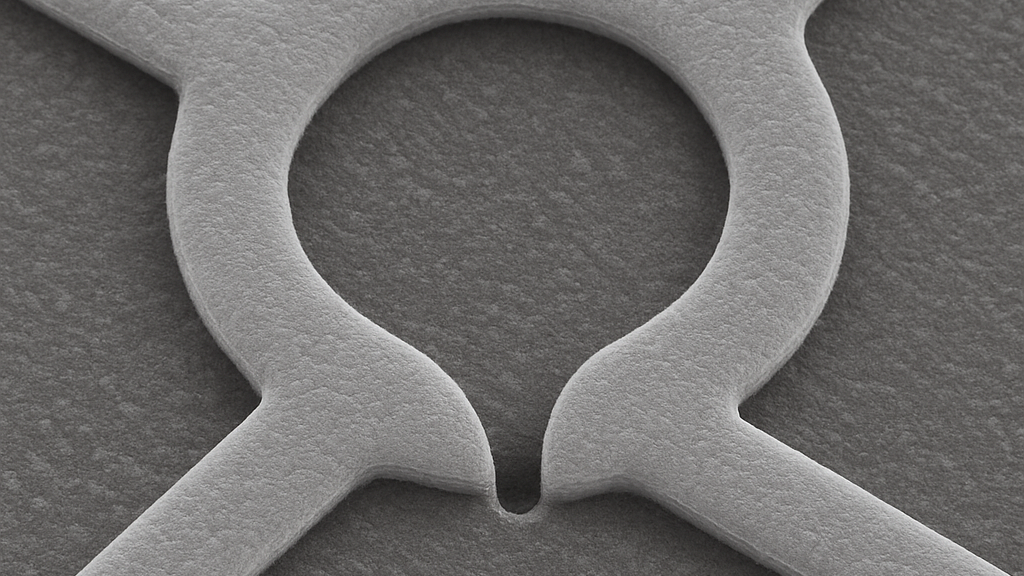
- A Josephson junction consists of two superconductors separated by a thin insulating barrier. Cooper pairs (paired electrons) can tunnel through the barrier due to the Josephson effect, yielding a supercurrent without voltage (up to a critical current).
- In such a junction, the phase difference of the superconducting order parameter across the barrier is a quantum variable. That phase difference (or more precisely, the conjugate variables of phase and charge) can behave quantum mechanically.
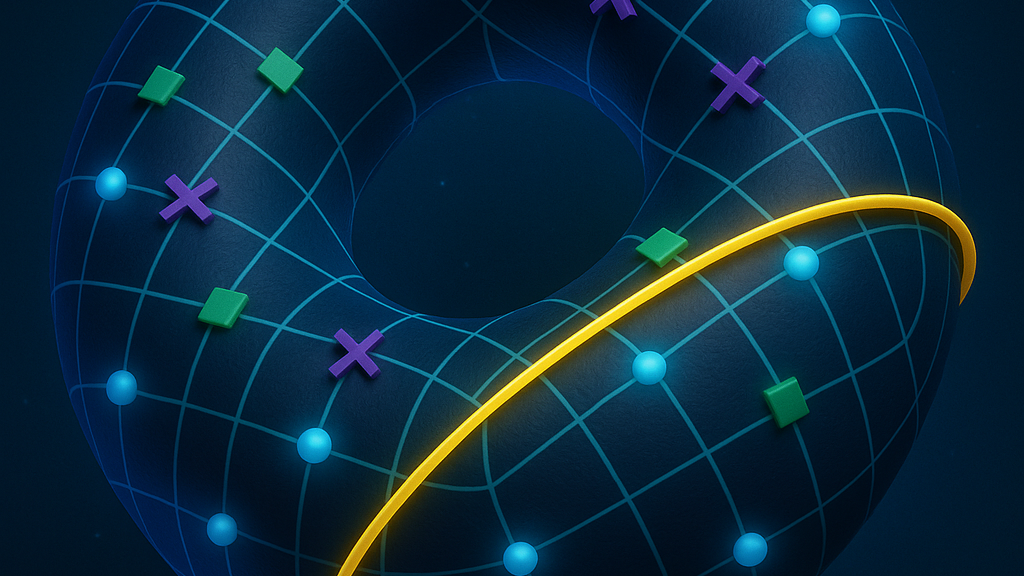
- In the experiments by Clarke, Devoret, and Martinis, they biased a Josephson junction with a current and observed that the junction could switch from its “zero-voltage” (superconducting) state to a finite-voltage state via a quantum tunneling process. This is sometimes called macroscopic quantum tunneling (MQT) of the phase variable. NobelPrize.org+3NobelPrize.org+3Phys.org+3
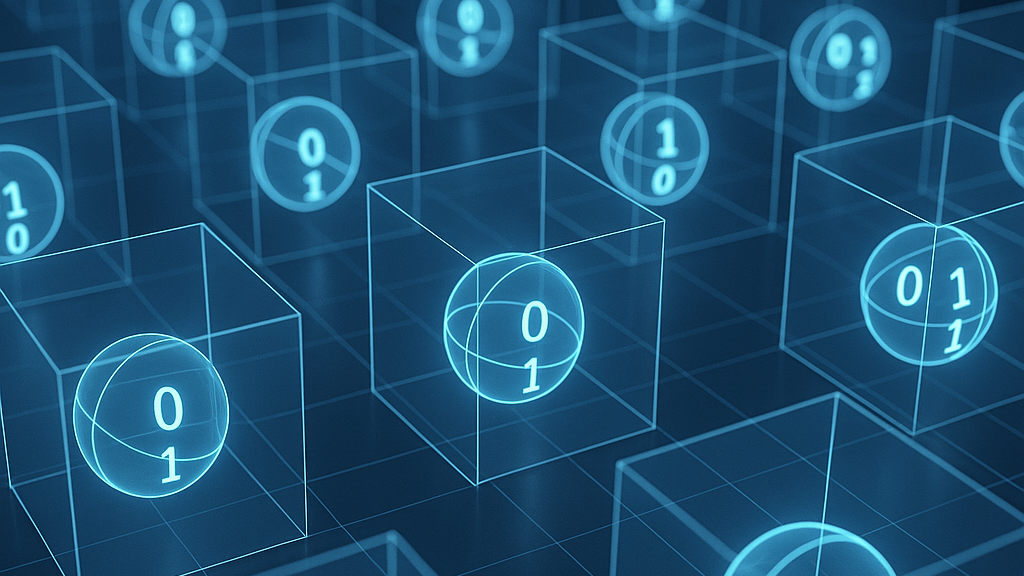
- They also used microwave pulses to probe and observe discrete energy levels of that macroscopic phase variable in the potential well of the Josephson junction. In effect, the superconducting circuit acted like an “artificial atom.” NobelPrize.org+3NobelPrize.org+3Scientific American+3
Why “Macroscopic”?
The term “macroscopic” conveys that the system has many particles (a superconductor involves huge numbers of electrons/Cooper pairs) and is large enough to be handled (a circuit you can hold) in contrast to single atoms or electrons. Demonstrating that a collective, many-body system can still display distinctly quantum tunneling and discrete spectra was a major conceptual leap.
The Key Experiments & Results
Here are some of the highlights of the experiments and their implications:
- Switching by tunneling By precisely biasing the Josephson junction and operating at very low temperatures (to suppress thermal activation), the team measured the rate at which the junction transitions (or “switches”) from its superconducting (zero-voltage) state to a resistive (voltage) state. They showed that this rate had the signature dependence expected for quantum tunneling, rather than purely thermal activation. Scientific American+3NobelPrize.org+3NobelPrize.org+3
- Microwave spectroscopy / quantized levels They applied microwaves to excite transitions between discrete energy levels in the potential well that traps the phase variable. The resonant absorption peaks corresponded to well-defined energy level spacings, confirming energy quantization in this macroscopic degree of freedom. Chemistry World+3NobelPrize.org+3NobelPrize.org+3
- Tuning parameters & theoretical modeling They varied currents, barrier heights, and microwave frequencies, checking consistency with theoretical models of a particle in a potential well plus quantum tunneling. The experiments matched the predictions for the phase variable behaving like a quantum particle in a potential. NobelPrize.org+2Scientific American+2
- Robustness and coherence Over the decades following those experiments, the techniques improved, leading to better coherence times (i.e. slower decoherence), better readout methods, and more complex superconducting circuits. This set the stage for modern superconducting qubits. AIP+4Chemistry World+4Scientific American+4
The Laureates and Their Roles
- John Clarke is a British-born physicist affiliated with UC Berkeley. He led the research group in which the foundational experiments were carried out. University of California+3Berkeley News+3Wikipedia+3 His prior and concurrent work on superconducting electronics and measurement techniques (e.g., SQUIDs) positioned his lab to make breakthroughs in observing quantum behavior in circuits. Wikipedia+2NobelPrize.org+2
- Michel H. Devoret is a French physicist known for his work in quantum circuits and superconducting qubits. At the time of the Nobel-winning experiments, he was a postdoctoral researcher in Clarke’s group. Berkeley News+4Wikipedia+4NobelPrize.org+4 Later, Devoret went on to lead work in quantum amplifier design, transmon qubits, fluxonium, and other architectures for quantum information. NobelPrize.org+3Wikipedia+3Chemistry World+3
- John M. Martinis was a PhD student under Clarke during the time of the key experiments. His 1985 doctoral work was titled “Macroscopic Quantum Tunneling and Energy-Level Quantization in the Zero Voltage State of the Current-Biased Josephson Junction.”NobelPrize.org+3Wikipedia+3NobelPrize.org+3 In later years, Martinis became a prominent figure in superconducting quantum computing, including work at Google’s Quantum AI lab. Wikipedia+2Scientific American+2
Together, the three combined theory, experiment, and insight to demonstrate quantum phenomena in a system far larger and more complex than previously seen.